DNS Cluster Management for Production Zones
DNS cluster management requires more than replicated zones. Learn how to control changes, protect delegation, monitor health, and recover safely on demand.
DNS cluster management requires more than replicated zones. Learn how to control changes, protect delegation, monitor health, and recover safely on demand.
A DNS outage rarely begins with every nameserver failing at once. More often, it starts with a zone that replicated incompletely, a delegated domain pointing to the wrong provider, or a well-intended record edit that removes mail routing. DNS cluster management is the discipline of preventing those small changes from becoming customer-facing incidents.
For hosting providers and infrastructure teams, a DNS cluster is not simply a group of authoritative servers running the same software. It is a production control plane for domains, web traffic, mail delivery, verification records, and customer applications. Managing it well means keeping zone data consistent while preserving a clear answer to harder operational questions: who changed what, which servers received the change, what depended on the prior configuration, and how can the team recover if the result is wrong?
What DNS Cluster Management Actually Covers
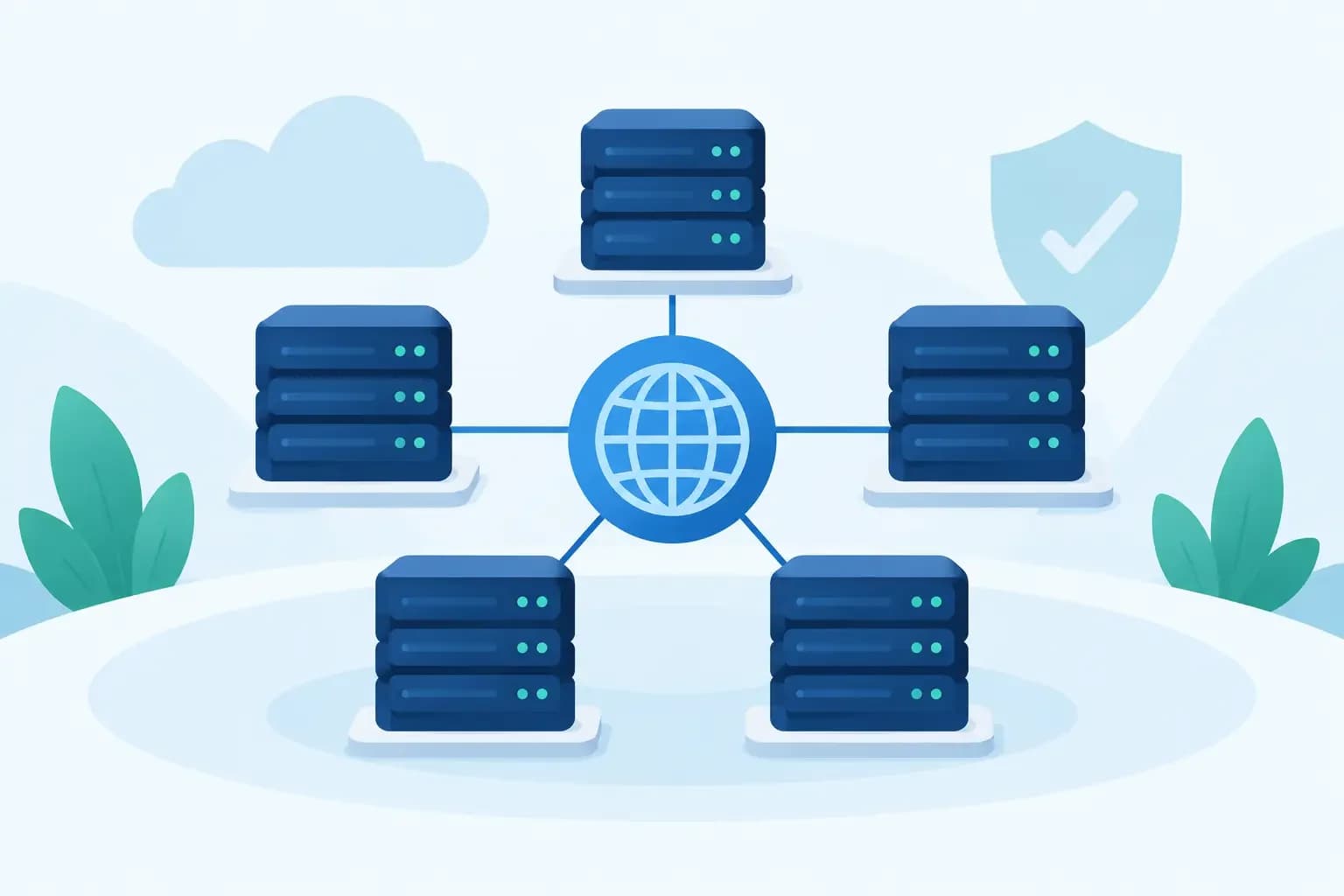
At a technical level, a DNS cluster distributes authoritative zone data across multiple nameservers. Those servers may be arranged as primary and secondary nodes using zone transfers, operated through a database-backed DNS platform, or updated through an API-driven configuration service. The implementation varies. The operating requirement does not: each authoritative server must return the intended answer for the intended zone.
That requirement has several layers. Zone data must be valid. Replication must reach the expected nodes. Public delegation must point to the cluster. Network paths must permit authoritative responses. And the cluster must continue operating when an individual node, provider, or management path is unavailable.
A team can have four healthy DNS servers and still have a broken DNS service if the registrar delegation is stale. It can also have a correctly delegated domain with a dangerous zone if an MX record was removed during a web migration. Cluster availability matters, but operational correctness matters just as much.
Start With a Clear Authority Model
The first decision is where authoritative zone data is allowed to originate. Without a defined source of truth, multiple administrators and systems can make valid-looking changes that overwrite one another or leave nodes serving different versions of the zone.
In a traditional primary-secondary design, the primary is the authorized publisher and secondaries receive transfers. This model is straightforward, but the primary needs careful protection. Limit transfer access, use transaction signatures where appropriate, and monitor serial progression. A secondary that continues serving an older serial is not merely behind schedule. It may be returning obsolete routing information to the internet.
Database-backed or API-managed clusters can reduce the operational friction of file-based zone management, especially when a provider manages many customer zones. The trade-off is that the control plane becomes critical infrastructure. If the database, API, queue, or deployment process fails, operators need to know whether existing authoritative nodes will continue serving last-known-good data and whether new changes can be safely paused.
Avoid treating every DNS node as independently editable just because the software permits it. Direct edits are sometimes necessary during recovery, but they should be exceptional, documented actions with a path back to the source of truth.
Separate Control Plane Health From Answering Health
A management interface can be unavailable while authoritative DNS continues answering normally. The reverse can also occur: the dashboard reports a successful update while one or more public nameservers return stale or invalid records.
Monitor both conditions separately. Control plane monitoring should cover the ability to authenticate, read zone state, submit changes, and confirm replication. Data plane monitoring should query each authoritative server directly from independent networks and validate expected records, response codes, and delegation behavior.
This distinction reduces confusion during an incident. If the control plane is impaired but DNS answers are healthy, the immediate action may be to freeze nonessential changes. If public answers are inconsistent, the priority is to isolate the affected node or replication path before customers receive conflicting results.
Make DNS Changes With Dependency Context
The highest-risk DNS changes are often described as simple requests: point a domain to a new server, change nameservers, add a verification record, or remove an old host. Each can affect more than the requester expects.
A nameserver change, for example, is not complete when the new NS records are entered at the registrar. The receiving zone must contain the records that preserve production services. Before changing delegation, compare the current public zone with the destination zone. Review A and AAAA records, CNAMEs, MX records, SPF policies, DKIM selectors, DMARC records, autodiscover entries, verification tokens, and service-specific records such as SRV or CAA.
This is where DNS-safe changes become operationally valuable. The goal is not to block routine work with a large approval process. It is to provide visible context before execution, scope the action to the intended zone or record set, and retain an execution record after the change.
For customer environments, role-aware access matters as much as validation. A support engineer may need permission to add a TXT verification record but not to alter nameserver delegation. A customer administrator may manage web records but require a controlled workflow for mail-related changes. Permissions should reflect the likely blast radius of an action, not simply an organizational title.
Replication Is a Process to Verify, Not Assume
A successful API response or a bumped SOA serial is evidence that a change was accepted. It is not proof that every authoritative node now serves the expected data.
Verification should query every node directly. Do not rely only on recursive resolver results, because resolver caching can conceal differences between authoritative servers. Check the SOA serial where it applies, then query the changed record and the related records that could be affected. For a mail routing change, that includes MX and relevant TXT records. For an address change, verify both IPv4 and IPv6 answers if the service publishes both.
Propagation is often used as a catch-all explanation for inconsistent answers. Sometimes that is accurate: recursive caches will retain prior records until TTL expiry. But an authoritative mismatch is not normal propagation. It is a cluster state problem. Treat it as such.
Teams should also set TTLs deliberately. Lowering a TTL before a planned migration can reduce the period during which resolvers retain old answers. Lower TTLs increase query volume and do not repair a bad change, so they are not a substitute for validation. For stable records, a reasonable longer TTL can reduce unnecessary authoritative load. The right value depends on how frequently the record changes, the cost of stale data, and the service architecture behind it.
Design Recovery Before the Incident
DNS recovery is not always a full-zone rollback. A complete restore can reintroduce records that were intentionally changed after the incident began. Often the safer response is a scoped restore point: recover the prior MX record, restore a deleted DKIM selector, or revert one host record while preserving unrelated updates.
Maintain versioned zone history with timestamps, actor identity, change reason, and before-and-after values. Audit logs should identify the user or automation that initiated a change, but they should also show the execution result and affected scope. That record supports incident response, customer communication, and later review without turning operators into detectives.
Recovery planning also needs a break-glass path. If the normal management system is unreachable, who can make an emergency change? Which credentials are available, where are they stored, and how is the emergency action reconciled afterward? A break-glass process without accountability creates a second problem. One with no tested access creates no recovery path at all.
Operational Signals Worth Watching
Cluster management becomes more reliable when teams alert on conditions that precede customer reports. A useful signal set includes failed zone publication, SOA serial divergence, transfer failures, unexpected delegation changes, authoritative query failures, elevated response latency, DNSSEC validation errors where DNSSEC is in use, and sudden removal of critical record types.
The alert should contain enough context to support the first decision. Identify the zone, nameserver, expected and observed state, recent change activity, and whether the issue is isolated or widespread. An alert that says only "DNS failed" creates an unnecessary diagnostic loop when time matters.
Automation can help here, but it should be controlled automation. An automated health check can remove an unhealthy secondary from a published nameserver set only if the team has defined the conditions, safeguards, and rollback behavior. Automatically rewriting zones based on incomplete signals is far more dangerous. The system should explain its intended action, operate within scoped permissions, and leave a record that an operator can review.
Treat the Cluster as Part of the Customer Environment
For providers, DNS cannot be managed as a separate utility that sits outside hosting, mail, certificates, backups, and support operations. A domain change can affect all of them. The strongest operating model connects DNS records to the customer account, service inventory, administrative permissions, and recoverable change history.
That connection makes support work more precise. When a customer reports that mail stopped after a domain move, the team can inspect delegation, compare authoritative answers, review the change record, confirm whether MX, SPF, and DKIM survived the move, and restore only what is required. Synconix is built around this kind of connected operational context rather than isolated administrative screens.
A well-managed DNS cluster should make routine changes uneventful and exceptional changes explainable. The practical test is simple: when a record must change under pressure, can the operator see the dependencies, execute only the necessary action, verify every authoritative node, and recover without guessing?