Designing safer restore workflows for hosting teams
Restore workflows should make high-impact recovery actions visible, reviewable and easy to reverse before operators touch production data.
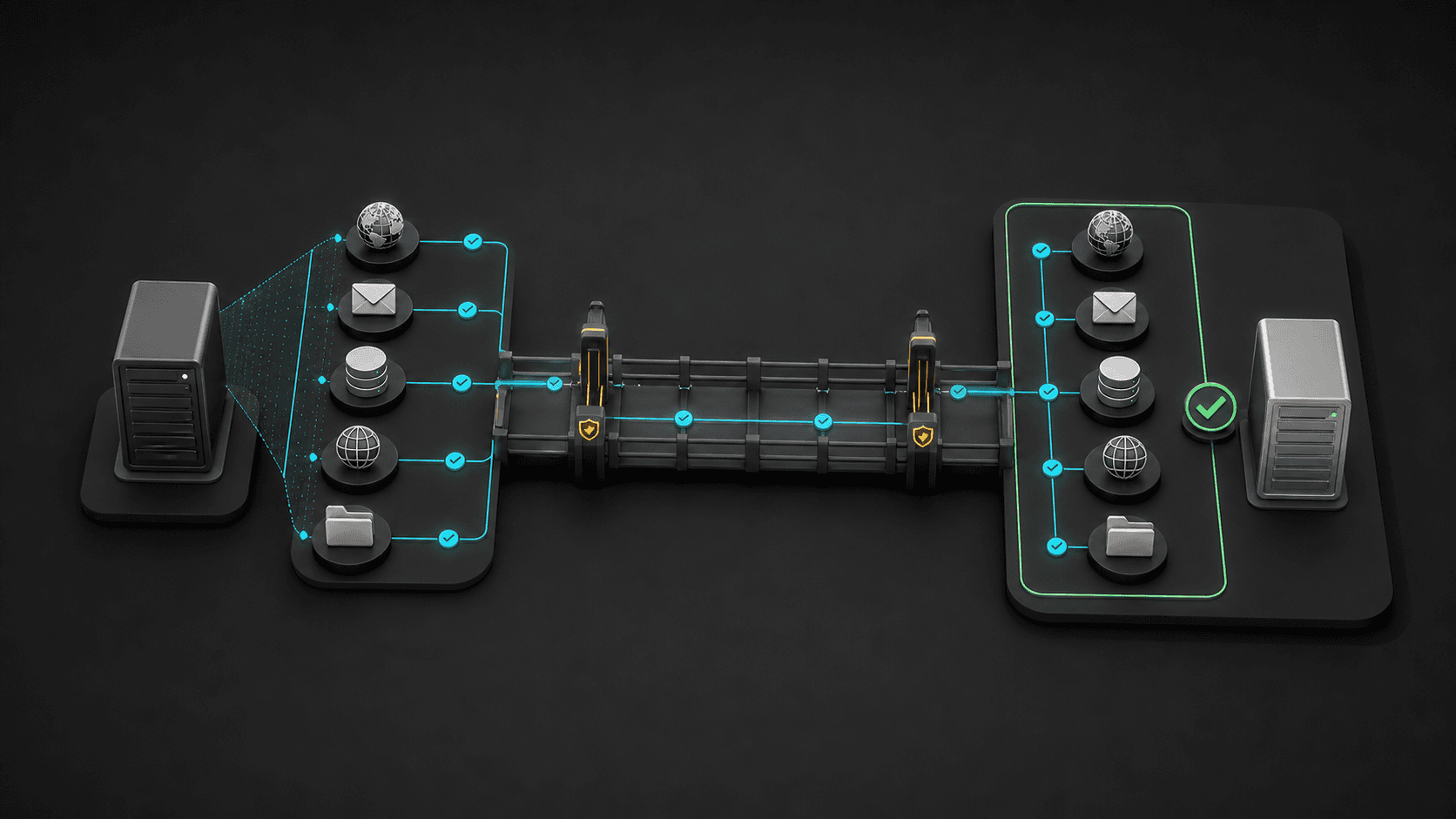
A practical restore workflow reduces blast radius, verifies scope and keeps recovery actions auditable when pressure is high.
Start with restore scope
Define exactly what you are restoring and where it will go. Is it a full server restore, a single volume, a database, a website or configuration only? The scope should be explicit enough for the system to calculate impact and dependencies.
In Synconix, a restore workflow should resolve dependencies automatically so operators can see databases, users, DNS records and file paths before anything is executed.
Make risk visible before execution
A preview step should show the changes that will occur and the resources that could be affected. This is where operators decide with confidence instead of guessing from a filename or timestamp.
Show files that will change, database objects that may be replaced, services that may restart and DNS or routing effects that could be introduced. If something looks off, stop before the restore runs.
Visibility turns a risky action into a deliberate workflow.
Keep recovery auditable
Every restore should leave a clear audit trail: who ran it, what was restored, what the system changed and when. This is essential for compliance, incident review and understanding what happened under pressure.
Logs should be easy to filter and export, with before and after context for the resources that changed.
Design for calm rollback
Even with strong previews, teams need an easy way back. Keep rollback options close to the restore workflow for a short, safe window after execution.
Store pre-restore state metadata and offer a targeted rollback that reverses only what was changed by the restore, not the entire server.
Safe restore workflows are about control under pressure. When operators can see impact, trust the system and undo changes carefully, recovery becomes faster and safer.